At the 2009 ELCA Church Wide Assembly, two notable measures passed. The first was a social statement on human sexuality, and the second was a revision in ministry policies that recognized and supported gay and lesbian relationships and welcomed such partners into the pulpit. The vote on the social statement came first, following a tornado in the vicinity of the Minneapolis Convention Center.
By late afternoon, the sun peeked out, and the voting members picked up their electronic voting devices, ready to vote. Professor Guy Erwin of California Lutheran University was a laity voting member from the Southwest California Synod. He was returning from a bathroom break when he heard the call to vote. He hustled back into the plenary hall and settled into his seat just as the presiding bishop said, “push one for yes, two for no.”
Out of 1,045 registered, 1,014 were present. To reach the constitutionally mandated 2/3 of voters present and voting, the social statement would need 676 affirmative votes. The vote totals appeared first on the monitor of the presiding bishop. With a quizzical look on his face, he turned to his parliamentarian for guidance, and then he announced, “the Social Statement is adopted,” as the totals flashed on the big screens. There were precisely 676 votes for the measure. Not a single vote to spare. Every single aye voter could legitimately claim to have cast the deciding vote; for Dr. Erwin and his sprint from the men’s room, that seemed especially true. 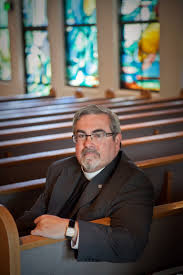
Guy Erwin was born in Oklahoma with roots in the Osage tribe of Native Americans. His life in the church would be that of a scholar and academic. While studying at Harvard, the history of Luther and the Reformation led him to the Lutheran Campus Ministry and the Lutheran Church. Later, while undertaking graduate studies at Yale, he considered ordination within the Lutheran Church of America shortly before its merger into the ELCA, but more studies intervened–at Tubingen and Leipzig in Germany. Upon his return from Europe, the ELCA had been formed, and the newly created Vision and Expectations stood as a barrier to his call to ordained ministry. In 1994, he met his life partner, Rob Flynn, and Dr. Erwin assumed that was the end of his prospects for ordination. Dr. Erwin continued his career as an academic, settling in at California Lutheran University (CLU) by 2000 where he has served as a faculty leader.
But, following the revision to ministry policies that the church wide assembly enacted later in the week, Dr. Erwin’s path to ordination opened up. On May 11, 2011, he was ordained by Bishop Dean W. Nelson of the Southwest California Synod, who said,
We are humbled and thankful to God for the privilege of receiving Dr. R. Guy Erwin onto the roster of ordained pastors of the Southwest California Synod. We have been blessed by Guy’s ministry for over a decade, for in addition to teaching at California Lutheran University, Guy has been the Bible study leader and/or presenter at our Bishop’s Colloquy for rostered leaders, at our Synod Assembly, and at our Synod’s Equipping Leaders for Mission School. During that same period, he has also been a preacher and teacher at several of our Synod’s congregations.
Two years later, on May 31, 2013, Rev. Dr. Erwin allowed his name to go forward during the Synod election of a new bishop to succeed Bishop Nelson. He made it past the first couple rounds in the ecclesiastical ballot process, and he was one of the seven remaining candidates called upon to address the plenary and then one of three to participate in a question and answer session. Emily Eastwood, the executive director of ReconcilingWorks, offered this eyewitness account:
A little nervous before he gave his opening speech, once at the microphone and speaking, he relaxed and told a bit of his story. He talked about Rob. The assembly listened silently in rapt attention, no chatting, no coughing or shuffling of papers. He did what he needed to do. He was completely authentic. From that point forward he was in his element, the teacher and pastor. He seemed to have fun with every question in the Q&A session, especially the one asking about how he would handle ministry to LGBT people. You should have seen his face. What a softball question. He responded with care for those who might be at different points in the conversation on LGBT inclusion. His answer was full of grace and the love of Christ. At that moment, he was the bishop, and most everyone knew it.
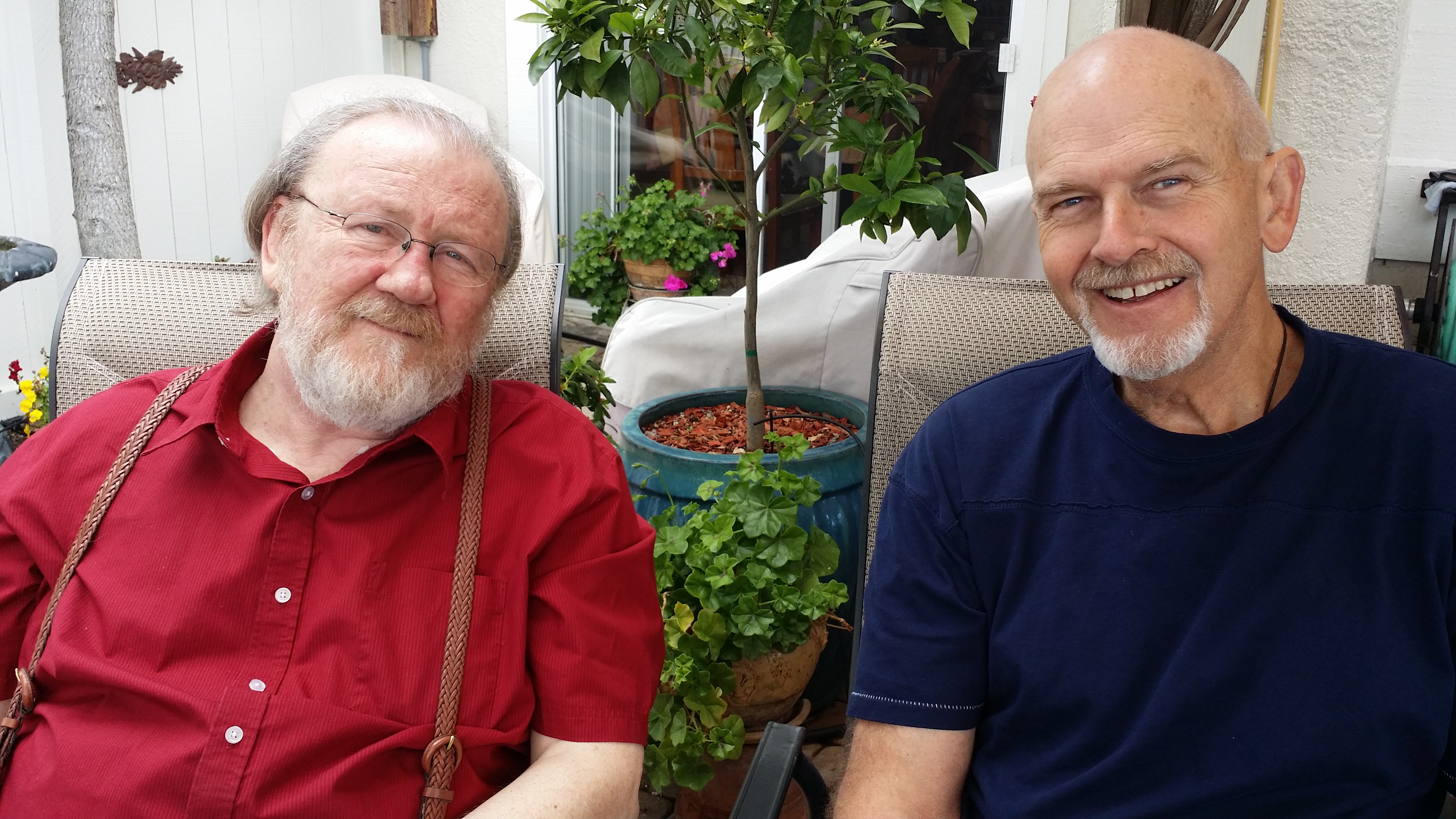
As the final vote tally was announced, Erwin sat with head bowed with partner Rob leaning in close. The weight of the moment was upon each of them. The call was clear and so was his commitment.
The crowd went wild. There was hardly a dry eye in the house. The assembly had elected the best candidate, he happened to be gay and Native American and a PhD., one of the world’s best known Luther scholars, and a very good pastor.
Emily Eastwood is a battle-scarred warrior. She has been active in LC/NA for over thirty years, the last decade as its leader. As the assembly applauded, she sobbed.
I cried. I cried as I had not in a long time, surprised by how much pent up hope there was in me for this historic moment. I know how to lose, but even now winning takes me by surprise.
Where to buy the book
Print copies are available from Amazon, the publisher, Barnes and Noble, Cokesbury, or an autographed copy straight from me. Amazon offers it in digital, eBook format for Kindle, and Barnes and Noble offers it for Nook. For iPad or other Apple users, you may order through the iTunes bookstore. Search on RW Holmen.
This is the last installment in the series Cast of characters countdown, which are biographical snippets and summaries of the stories of the iconic pilgrims and prophets on the road to full inclusion who are featured prominently in Queer Clergy. As with all these posts, this is merely a summary of the full story, which is woven into an overarching narrative in the book. Here’s the list of prior posts:
1968 Troy Perry (founder of the MCC)
1970 Robert Mary Clement (gay priest who marched in the first Gay Pride parade)
1972 William Johnson (first out gay man to be ordained by a traditional denomination)
1974 James Siefkes (Lutheran pastor behind the formation of Lutherans Concerned)
1974 David Bailey Sindt (founder of More Light Presbyterians)
1975 Steve Webster (organized the first gathering of gay Methodists)
1975 Dr. Louie Clay (founder of Episcopal Integrity)
1976 Chris Glaser (longtime Presbyterian activist)
1977 Ellen Marie Barrett (first out lesbian ordained to the Episcopal priesthood)
1978 Loey Powell (early UCC lesbian pastor and activist)
1980 Mark Bowman (founder and leader of RMN and editor of Open Hands Magazine)
1982 Melvin Wheatley (Methodist bishop and straight ally)
1987 Ann B. Day (Led the UCC ONA for twenty years)
1990 Jeff Johnson, Ruth Frost, Phyllis Zillhart (Extraordinarily ordained Lutherans)
1990 John Shelby Spong (leading straight ally in the Episcopal House of Bishops)
1992 Janie Spahr (Presbyterian leader of “That All May Freely Serve”)
1994 Ross Merkel (defrocked Lutheran allowed to remain on call with a “wink-and-a-nod” from his bishop)
1996 Walter Righter (Episcopal Bishop whose heresy trial opened the door for queer clergy)
2000 Jimmy Creech, Greg Dell, Joseph Sprague, and Jack Tuell (Methodist trials to punish clergy who performed covenant services for same-gender couples)
2001 Anita Hill (extraordinarily ordained Lutheran)
2003 Gene Robinson (gay bishop of the Episcopal Diocese of New Hampshire)
2004 Karen Dammann and Beth Stroud (Methodist clergy put on trial for being lesbians)
2007 Bradley Schmeling and Darin Easler (defrocked Lutheran clergy who were the first to be reinstated)
2011 Scott Anderson (first gay Presbyterian to be ordained following policy change)
2011 Amy DeLong (out, partnered Methodist minister on trial)