I first met Methodist Steve Webster at the 2010 Wisconsin Annual Conference gathering in La Crosse, Wisconsin. It was sheer serendipity. I was there hawking my novel about Paul the apostle, and the exhibit hall organizer happened to place me next to Kairos CoMotion, a Wisconsin-based Methodist LGBT group. Webster and his husband, Jim Dietrich, set up the booth and returned regularly between plenary sessions; we had plenty of time to become acquainted.
Two years later, I was researching the formation of the first Methodist LGBT activist group for Queer Clergy. In Chicago, I met with Morris Floyd, who had been present at the 1978 gathering of gay and lesbian Methodists, and with Mark Bowman, whose involvement began in 1980, but I knew that the first gathering of LGBT Methodists occurred at a church near Northwestern University in 1975. Who had been there? Who knew about the initial formation of the gay Methodist caucus?
Steve Webster’s name came up. The same Steve Webster I knew from Wisconsin?
I arranged to have brunch with Steve and Jim near their home in Madison, Wisconsin. Yes, it turns out, Steve had been there. In fact, he had organized that first gathering of gay Methodists!
In 1974, a New York Times headline stated, “Methodists Reject Homosexual’s Ordination Bid.” Steve Webster was that rejected Methodist, and the roadblock in his journey to ordained ministry diverted him into the ministry of an activist.
“I got a hold of one of those old mimeograph stencils and rolled it into my Smith-Corona typewriter and carefully typed up a flyer about the meeting.”
Using return addresses from the letters of support he received after the NY Times article, he mailed the flyer as an invitation to an organizational meeting. That 1975 meeting of around twenty gay Methodists at Wheadon UMC in Evanston, Illinois, marked the birth of “The United Methodist Gay Caucus,” soon to be renamed “Affirmation,” and “The Reconciling Congregation Project” would be a later outgrowth in the 1980s.
 Hundreds of UMC congregations across the country and many regional annual conferences are now members of the Reconciling Ministries Network, the offspring organization of that initial gathering in Chicago. Though there have been significant local and regional advances, national LGBT policy remains oppressive due to the overriding conservatism of international delegates to UMC General Conference. At the last General Conference in Tampa in 2012, 38% of the delegates were international, and they formed a solid bloc to prevent change in the oppressive denominational policies.
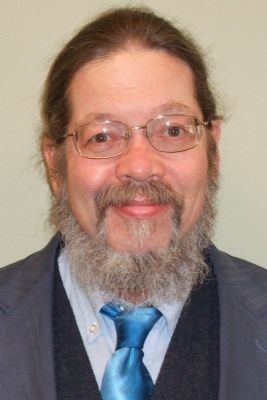
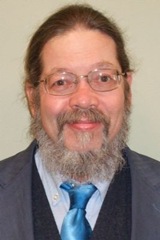
Over the decades, Webster’s beard, pony tail, and rainbow bandana have become well-known at regional and national Methodist conferences; he has participated in “direct action” protests organized by Soulforce; and he has penned letters to UMC leaders.
I saw Steve and Jim at the 2012 General Conference. Jim said to me, “We’ve been together for over twenty years, and I have only seen Steve cry once. This week, when it became clear that our church was going backwards, not forward, I saw him cry again.” Jim’s own eyes misted. “At a worship service of our gay community, Steve said, ‘I won’t see it happen in my lifetime,’ and then he bawled like I’ve never seen.”
This post is part of the series Cast of characters, which are biographical snippets and summaries of the stories of the iconic pilgrims and prophets on the road to full inclusion who are featured prominently in Queer Clergy. As with all these posts, this is merely a summary of the full story, which is woven into an overarching narrative in the book. Here’s the full list of these posts:
1968 Troy Perry (founder of the MCC)
1970 Robert Mary Clement (gay priest who marched in the first Gay Pride parade)
1972 William Johnson (first out gay man to be ordained by a traditional denomination)
1974 James Siefkes (Lutheran pastor behind the formation of Lutherans Concerned)
1974 David Bailey Sindt (founder of More Light Presbyterians)
1975 Steve Webster (organized the first gathering of gay Methodists)
1975 Dr. Louie Clay (founder of Episcopal Integrity)
1976 Chris Glaser (longtime Presbyterian activist)
1977 Ellen Marie Barrett (first out lesbian ordained to the Episcopal priesthood)
1978 Loey Powell (early UCC lesbian pastor and activist)
1980 Mark Bowman (founder and leader of RMN and editor of Open Hands Magazine)
1982 Melvin Wheatley (Methodist bishop and straight ally)
1987 Ann B. Day (Led the UCC ONA for twenty years)
1990 Jeff Johnson, Ruth Frost, Phyllis Zillhart (Extraordinarily ordained Lutherans)
1990 John Shelby Spong (leading straight ally in the Episcopal House of Bishops)
1992 Janie Spahr (Presbyterian leader of “That All May Freely Serve”)
1994 Ross Merkel (defrocked Lutheran allowed to remain on call with a “wink-and-a-nod” from his bishop)
1996 Walter Righter (Episcopal Bishop whose heresy trial opened the door for queer clergy)
2000 Jimmy Creech, Greg Dell, Joseph Sprague, and Jack Tuell (Methodist trials to punish clergy who performed covenant services for same-gender couples)
2001 Anita Hill (extraordinarily ordained Lutheran)
2003 Gene Robinson (gay bishop of the Episcopal Diocese of New Hampshire)
2004 Karen Dammann and Beth Stroud (Methodist clergy put on trial for being lesbians)
2007 Bradley Schmeling and Darin Easler (defrocked Lutheran clergy who were the first to be reinstated)
2011 Scott Anderson (first gay Presbyterian to be ordained following policy change)
2011 Amy DeLong (out, partnered Methodist minister on trial)
2012 R. Guy Erwin (gay professor elected as ELCA bishop)