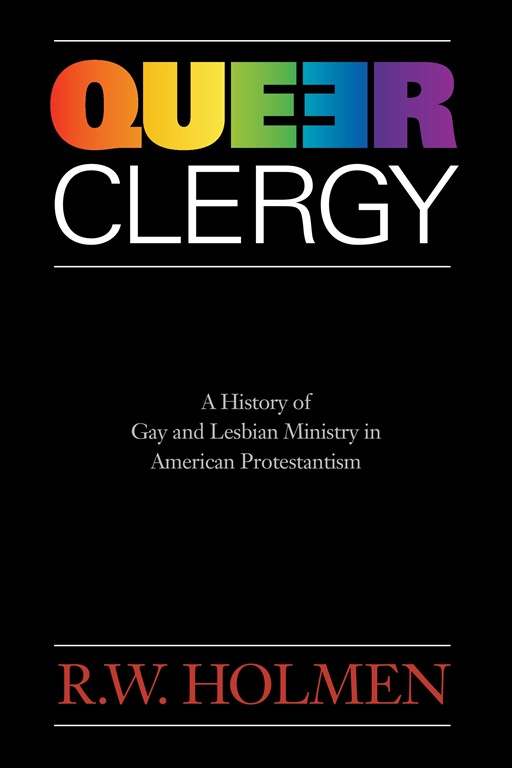
I’m a church nerd–more precisely, a church convention groupie. When my wife and I were sent as voting members to the inaugural assembly of our NE Minnesota ELCA Synod (1988), we were hooked. We returned year after year as voting members or as guests for the fellowship, the bookstore, stirring worship, and ecclesiastical politics. More recently, I have been at numerous regional Methodist, Episcopal, Lutheran, and UCC conventions in the Midwest hawking my books. While researching and writing Queer Clergy: A History of Gay and Lesbian Ministry, I attended the Methodist General Conference of 2012, the Presbyterian General Assembly of 2012, the Episcopal General Convention of 2012, and the last three ELCA church wide assemblies.
All this is to say I feel downright left out as the Presbyterian General Assembly is currently underway in Detroit, especially because it appears that history is happening.
For Lutherans, Episcopalians, and the UCC, blessing the relationships of same-gender couples has never been a contested issue, compared to the decades-long struggle over LGBT ordination. Given the progressive DNA of the UCC, the lack of significant controversy is hardly surprising. For the Lutherans and Episcopalians, blessing gay or lesbian partners was largely left to the discretion of the pastor/priest who was free to “explore the best ways to provide pastoral care.” Such discretion has naturally rolled over into performing marriages as state after state have changed their civil definitions of marriage.
For the Methodists, performing covenant ceremonies or–God forbid, marriages–has been the LGBT issue. Beginning with the defrocking trial of Rev. Jimmy Creech before the turn of the century to the recent defrocking of Rev. Frank Schaefer, along with thousands of clergy and bishops who are willing to conduct LGBT marriages in defiance of the Methodist Book of Discipline, the Methodist journey to full inclusion still has miles to go.
Which brings us to the unique circumstances of the Presbyterians.
Ordination of LGBT ministry candidates has also been the principal source of Presbyterian controversy over the years–from judicial decisions interpreting a 1978 “definitive guidance” that prohibited LGBT ordinations, through the adoption of “fidelity and chastity” versus “fidelity and integrity” in the 1990s, through disagreement over “that which the confessions call sin” and the mysterious and erroneous reference to homosexuality in modern interpretations of the centuries-old Heidelberg Confession, through thrice-adopted reforms by general assemblies only to see the presbyteries fail to ratify, to the 2010-2011 breakthrough that allowed LGBT ordination. While the decades-long debate over LGBT ordination occupied the attention of the church, the issue of rites of blessing remained secondary. Now that ordinations of gays and lesbians are occurring regularly, attention has switched to marriage equality.
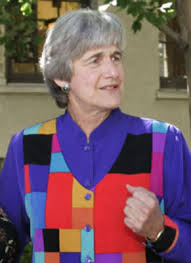
In ecclesiastical court decisions early in this century, the Presbyterian “Supreme Court” drew a bright line between clergy conducting covenant services (permitted) and officiating at legal marriages (not permitted). In fact, the earliest cases were dismissed because the purported marriage of a gay or lesbian couple was not legal in the jurisdiction in which it was performed, but that judicial dodge was no longer available as marriage equality spread from one jurisdiction to the next. Yet, when the Presbyterian Supreme Court ruled that Rev. Dr. Jane Spahr had repeatedly violated church policy by performing marriage ceremonies and remanded her case to her local presbytery to impose censure, the presbytery instead voted to support her ministry.
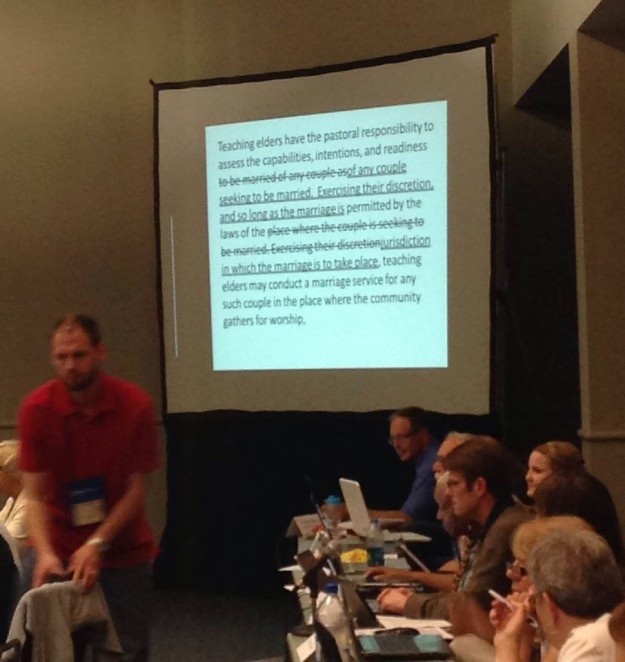
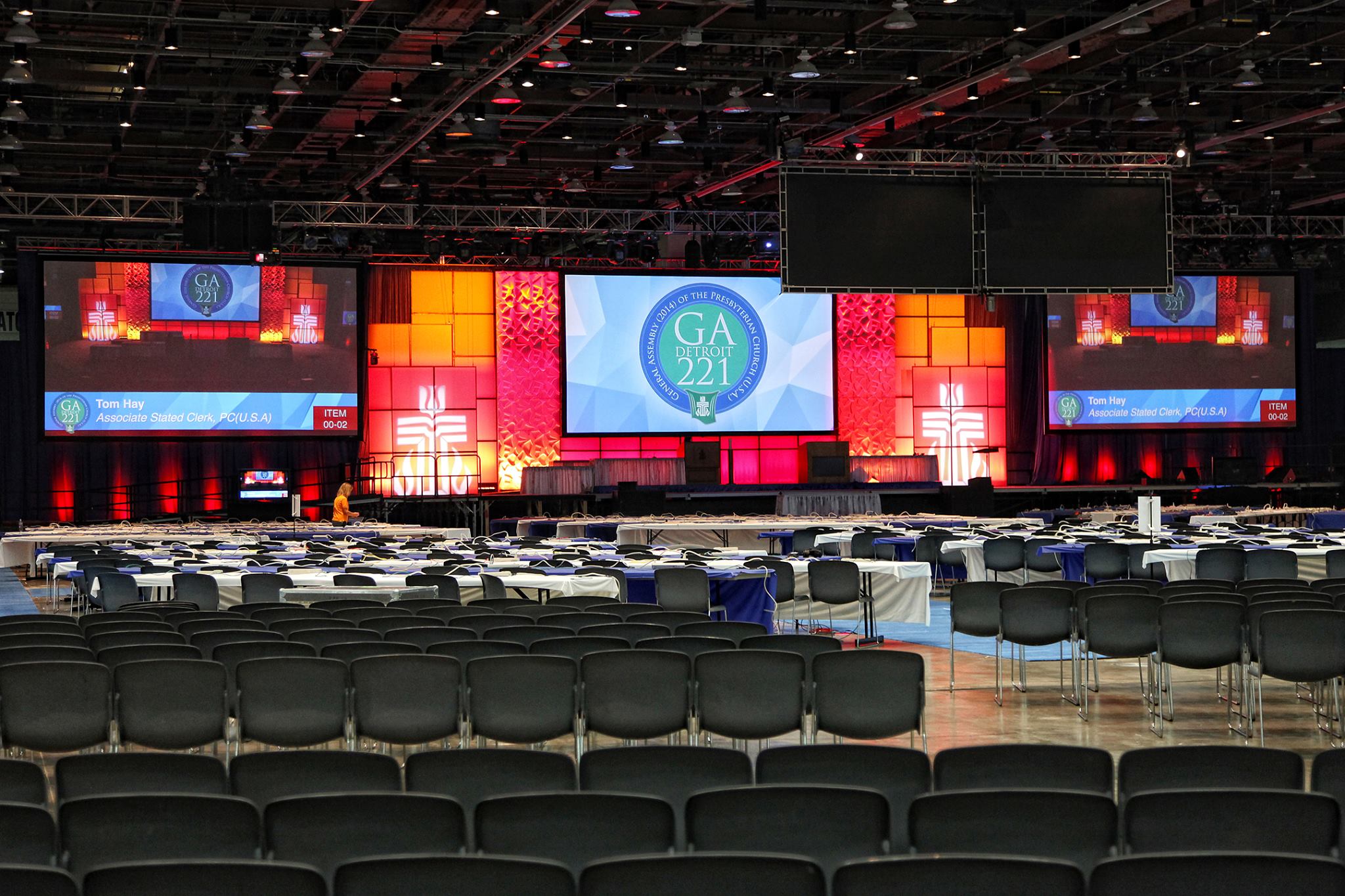 Which brings us to General Assembly, the national gathering of the church that meets once every two years and which has ultimate policy-making, legislative authority–but often subject to ratification by the 173 regional presbyteries. Although there are numerous proposals to be considered, the principal issues are narrowed to two: an authoritative interpretation (AI) that would allow clergy, as a matter of conscience, to officiate at same-gender weddings, and an amendment to the Book of Order that would change the definition of marriage from “a man and a woman” to “a couple.” The first step of the process is committee hearing and recommendation. Earlier, both matters passed out of committee with strong affirmative votes (51-18 for the AI and 49-18 for the amendment). If both measures pass at plenary, the AI will become immediately effective without further action, but the amendment must go to the individual presbyteries for ratification, which will require majority action.
It’s exciting to watch history unfold, even from afar. Godspeed, Presbyterians.