Author Archives: Obie Holmen

A thin slice of the ELCA

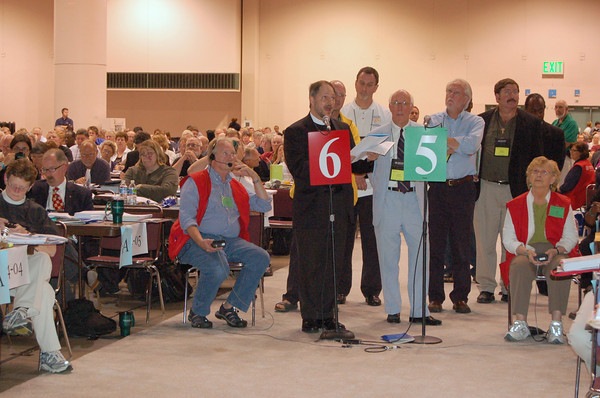
Yesterday, I attended the Cannon River Conference Assembly at St. Olaf College in Northfield.  The Cannon River Conference is one of the five conferences of the SE Mn synod of the ELCA, and the others also convened yesterday in annual assemblies in various locations around the synod.  Within the political polity of the ELCA, conferences serve as a stepping stone between congregations and synod assemblies and ultimately the biennial church wide assembly.  In the SE Mn synod, the clergy and lay voting members to the 2011 churchwide assembly were nominated yesterday at the conference assemblies.  These nominations will then be affirmed by the annual synod assembly in a couple of months (additional nominations from the floor are possible but rare).

So, our conference is merely one of over 300 conferences of the ELCA, and we are therefore just a small microcosm of the national ELCA.  Thus, what happened at the Cannon River Conference was merely a thin slice of the whole, but interesting, nevertheless.

Of all the candidates for church wide voting members, both lay and clergy, not a single one expected the 2009 pro-LGBT decisions to be revisited in 2011.  Not a single candidate expressed a desire for an agenda of reconsideration; instead, the clear preference was to move forward and to heal.  Interestingly, of the four candidates for male, lay, voting member, the two who expressed a willingness to listen to both sides if the partnered gay clergy ministry policies reemerged as an issue in 2011 received fewer votes than the other two candidates who expressed unwavering support for the revised policies.  In this conference at least, the overwhelming sentiment was that the 2009 church wide assembly did a good thing regarding partnered gay clergy, and it is time to move on.

Bishop Huck Usgaard was himself the synodical representative, and he offered several interesting tidbits of information.

In 2009, the synod received 96% of budgeted revenues based upon congregational pledges.  Over half of the congregations achieved their pledged amounts and half of those actually exceeded their pledges.  The synod itself achieved its pledge of over $1 million to the churchwide ministries.

But, 2010 is likely to be more challenging, and the synod’s budget will be reduced.  One item receiving serious consideration is the practice of full time campus ministers.  Bishop Huck suggested the synod is looking at a “town-gown” system whereby campus ministers would only be part time while also serving part time in local parish ministries.

Gay clergy return to ELCA

debaters The “gay clergy” resolution passed at the 2009 ELCA churchwide assembly reads as follows:

RESOLVED, that the ELCA commit itself to finding a way for people in such publicly accountable, lifelong, monogamous, same-gender relationships to serve as rostered leaders of this church.

This resolution didn’t actually change ministry policies, but effectively committed the church infrastructure to do so.  The process is underway but not yet completed to amend the multi-page 1990 document entitled Visions and Expectations, to wit, the one sentence out of the lengthy document that stated,

Ordained ministers who are homosexual in their self-understanding are expected to abstain from homosexual sexual relationships.

Due to the 1990 policy, many gay and lesbian persons simply abandoned their call to the ordained ministry.  Emily Eastwood, the head of Lutherans Concerned North America, is one example.  Others left the ELCA and pursued their call to the ministry in other denominations such as the UCC or Episcopal Church.  A few found Lutheran congregations willing to call them, despite the potential for ELCA punitive measures (the first congregations were expelled from the ELCA but later congregations were merely censured).

Although the revised ministry policies are not yet finalized or effective, the process of reconciliation and restoration is already underway.  I previously reported on a San Francisco congregation that was expelled that is now engaged in discussions about returning to the ELCA and about their pastor’s restoration to the ELCA clergy roster. 

The past week saw a few more examples of healing.

The blog of Extraordinary Lutheran Ministries (ELM) reports that a Missouri congregation that has been under censure for a decade has been restored to the good graces of the ELCA.

The censure against Abiding Peace Lutheran congregation in Kansas City, Missouri which has been in effect since March 2001 has been lifted. The censure was put in place because the congregation called and ordained ELM roster member Pastor Donna Simon the previous October. Bishop Gerald Mansholt of the ELCA Central States Synod lifted the censure.

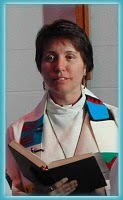
Donna SimonPastor Donna has served that congregation since her ordination and call. Donna Simon is a 1999 graduate of Pacific Lutheran Theological Seminary, Berkeley, CA. She was extraordinarily ordained by ELM in 2000.

Her service and ministry drew praise from the bishop. In his letter to the congregation, he said of Pastor Donna, a lesbian not yet on the roster of the ELCA, and her service as pastor for nine years: “…though ordained outside the established processes of the Church, Pastor Simon has been a gracious witness among us in this synod as well as in the larger Church. She has spoken the truth in love, and shared her witness and struggle as a baptized child of God, even as she has prayed for a day of wider understanding and acceptance in the Church.”

Bishop Mansholt, in notifying the synod of the lifting of the censure, repeated the above praise for Pastor Donna and commented on the faithfulness of the congregation at Abiding Lutheran: “As the Church studied, prayed and conversed with one another over the matters of gay and lesbian people in the Church, Abiding Peace Church might have walked away. But they remained in the Church and stayed in dialog with brothers and sisters who were trying to make sense of these issues in the light of the Gospel. They kept on praying for a better day, a time of wider awareness and acceptance. . . . I know the congregation also longs for the day when their pastor might be welcomed onto the roster of the ELCA.”

Blog friend Susan Hogan at Pretty Good Lutherans also posts on this announcement, and there are some great comments following her post such as this one from Pastor Christine Iverson:

I served Abiding Peace as an intentional interim for more than 3 years. They called Pastor Simons a few years after I left. They never did want to leave the ELCA and the bishop at the time and they tried to find ways to continue together. The process that led to the censure decision was done with great care and inclusion and I think that probably had a part in the congregation’s decision to hang in there with us. Unfortunately, the bishop, synod council, pastor, and the congregation were bound by the requirements of the ELCA constitution.

On a personal note, when my daughter was very ill, Donna came and ministered to us both for which I will always be grateful. She is a gifted colleague.

On the other hand, conservative blogger “Shrimp” at Shellfish blog, offers the following condescending, sarcastic commentary:

We at Shellfish can imagine just how devastating it is to a small congregation (latest reported average Sunday attendance: 18) not being able to serve on a synod committee. But if Bishop Mansholt appreciates their constant presence, who are we (with “bound consciences” scandalized by Miss Simon serving as a pastor without any sign of repentance on her part) to object to welcoming them back fully?

And a comment to Shrimp’s post adds:

I just read of a pebble tossed down the slippery slope of an apostate church. Everyone therefore make a joyful noise, for avalanche starts in this very way.

It strikes me as revealing that the Henny Pennys who cluck about the demise of the ELCA do so with such self-righteous glee.

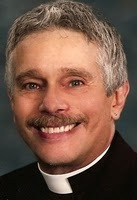
Vince Lavieri The same Extraordinary Ministries blog also reports on a former LCA pastor who left and became a UCC pastor because of the former ministry polices but now seeks to return to the ELCA.  Pastor Vince Lavieri:

values the home that the UCC has given him during his time of exile from the ELCA, deeply appreciating the UCC’s particular insight that God Is Still Speaking. Vince is at core a confessional Lutheran who yearns to return to parish ministry in a Lutheran context.

Welcome home, Pastor Vince.

ELCA Lutheran Disaster Relief to Haiti swells

As the week draws to a close, the ELCA announced that total contributions received for Haiti now exceed $4.6 million!

CHICAGO (ELCA) — Since the earthquake in Haiti one month ago, the Evangelical Lutheran Church in America (ELCA) has received over 27,000 gifts totaling more than $4.2 million to support humanitarian relief efforts in Haiti. According to ELCA Treasurer Christina Jackson-Skelton, the ELCA received an additional $320,000 in a matching grant from Thrivent Financial for Lutherans, bringing the overall total to more than $4.6 million in gifts to the ELCA.
     “We’ve seen a phenomenal response,” said the Rev. Daniel Rift, director, ELCA World Hunger and Disaster Appeal. Rift said members of the ELCA have been “faithful in their giving, bearing witness to the hope for the Lutheran church and communities in Haiti.”
     One-quarter of Haiti’s population has been directly affected by the earthquake and that presents an overwhelming challenge for those responding with humanitarian aid, said Rift. “The only way to truly, effectively respond is to build long-term partnerships with Haitians,” he said.
     Financial gifts from the 4.6-million-member ELCA are used to purchase and distribute medicine, drinking water, food, emergency shelter, sanitation and hygiene kits and other materials to aid survivors of the earthquake. Lutherans are also working to provide psychosocial services and other support.
     The funds are distributed to three partner organizations of the ELCA working on the ground in Haiti — The Lutheran World Federation (LWF), Geneva; Lutheran World Relief (LWR), Baltimore; and Church World Service (CWS), New York.

ELCA youth to return to New Orleans

Ready to Serve By all accounts, the 2009 ELCA youth gathering in New Orleans was a smashing success.  Here is a list of my prior blog posts about the New Orleans experience.

ELCA Youth Gathering in New Orleans (July 25, 2009)

The Journey to New Orleans (July 28, 2009), which is a diary like account of one Pastor and his entourage from Hector, Minnesota (my brother-in-law).

A thank you from a New Orleans resident (July 31, 2009)

These youth gatherings occur once every three years, so the next get-together will be in 2012, and the ELCA has announced a return to the scene of its recent success.

     CHICAGO (ELCA) — The Youth Gathering of the Evangelical Lutheran Church in America (ELCA) will return to New Orleans in 2012. Returning to a host city consecutively is unprecedented in the history of ELCA Youth Gatherings, according to Heidi Hagstrom, director for youth gatherings, ELCA Vocation and Education. The gathering will take place July 18-22, 2012.
     Recognized as the largest event organized by the 4.6 million-member denomination, the ELCA Youth Gathering is a triennial event that brings together tens of thousands of high-school-age Lutherans from across the country and overseas for leadership development, faith formation, service opportunities and more.
     In the summer of 2009 about 37,000 Lutheran teenagers, adult leaders and others gathered in New Orleans not only to paint and make home repairs but to learn about and experience the faith of people who live there. Residents of New Orleans and others along the U.S. Gulf Coast continue to recover more than four years after Hurricane Katrina.
     “I don’t think that we have learned all we can from New Orleans, yet,” said Hagstrom. “New Orleans has so much to teach us about practicing God’s hospitality. By paying attention to the spirit’s activity in and through New Orleanians, I think we get a glimpse of God’s intention for the whole world,” she said.

A Wretched Man novel release date set

Regular followers of this blog know that I have penned a novel entitled A Wretched Man, a novel of Paul the apostle.  For those who didn’t know this but are interested, you can click on the Wretched Man tab above for prior postings about the novel.

Here are abbreviated versions of the advance reviews we have received:

a stunning fictional account of the early church…the most authentically historical novel ever written about the lives of the apostles…presents the apostles as real flesh and blood human beings…this is a story that will both shock and inspire any Christian who is truly searching to find and follow the historical Jesus.

From review by Professor Jeffrey Butz

a powerful recreation of the world of Paul, James and Peter that pulls no punches…highly readable novel, based on contemporary scholarship…Paul comes alive as a complex individual…this book opens up the reality of the world of Paul and his contemporaries in a way no other work does…real individuals, with passions and agendas, step on to the world stage.

From review by Professor Barrie Wilson

a compelling exploration of the Jewish and Gentile movements in the first century…A Wretched Man will help you to imagine your way into Paul’s life and times…Holmen definitely captures the “feel” of first-century Roman territories…well-versed in contemporary progressive scholarship about Paul…these characters leap off the page and into our imaginations.

From review by Christian education consultant Tim Gossett

In meetings with my publisher last week, March 1st was set as the official release date although the actual date when copies are available may vary by a few days.  We also discussed the process of becoming listed with Amazon and Barnes and Noble for online purchasers.  For the past month or more, I have been working with the publisher’s web designers, and a robust website should soon be functional, which will include ecommerce capability for purchase directly without a middleman.

Of course, we will do traditional marketing as well, including book signings/readings.  The publicist is beginning to set these up, but if any local followers of this blog want to contact me directly to arrange an event, feel free to do so: obie (dot) holmen (@) gmail (dot) com.

Are ELCA Lutherans heretical? One scholar thinks not.

the bible We all understand that the holier-than-thou-trinity of Lutheran CORE, WordAlone, and LCMC (Lutheran Congregations in Mission for Christ) believes that the Bible condemns all same gender sexual intimacy even for couples in a lifelong, monogamous relationship.  Many of us (including the majority of voting members at the 2009 Churchwide Assembly) disagree, but what we find particularly odious about the rhetoric emanating from the schismatics are their self-righteous pronouncements that are sprinkled with judgmental terms such as “heresy”, “unchurched”,  and “unbiblical”.  There is the persistent implication that the ELCA has abandoned Biblical teaching and authority.  “The ELCA is the one that has departed from the teaching of the Bible,” sounds the refrain.  And this is no mere exegetical or theological debate, for the ELCA is now so polluted that the schismatics must leave for fear of contamination.  One must be wary of the purity of the minister who offers the bread and wine, after all.

In response to the bluster of the schismatics, Rev Dr. Brian Peterson, Professor of New Testament, Lutheran Theological Southern Seminary, has penned a temperate and reasoned article. 

“[W]e need to avoid, as much as possible, confusing the authority of the Bible with the authority of poor translations, incorrect assumptions, partial knowledge, or contested interpretations,” he begins, and “I do not believe that doing so constitutes the abandoning of the Bible’s authority. Honesty and the commandment not to bear false witness against others requires that we not confuse our disagreements about the meaning of these texts with faithlessness, heresy, or the denial of Scripture’s authority,” he concludes (emphasis mine).

Along the way, Dr. Peterson offers his scholarly interpretation of the so-called clobber passages, suggesting that they are difficult and uncertain, based on questionable “assumptions from first century culture, medicine, and science”.  Of course, the Levitical lists of abominations derive from a worldview at least half a millennium earlier than the New Testament texts.

It is not my goal here to argue that my way of reading these texts is certainly the one right way. It has been my goal, however, to show how someone can read these texts with a high regard for their authority over the life of the church, and still speak in favor of the proposals adopted by the ELCA regarding homosexuality.

But serious questions remain about how these texts address the issues we are facing and the people involved. There are legitimate questions about how well the concerns addressed in these biblical texts correspond to the committed, exclusive, faithful, lifelong relationships that are the focus of the ELCA’s action. There are genuine difficulties in understanding some of these verses, and we ought to wonder whether, and why, we are trying to place too much weight on a few uncertain verses. Proper interpretation always involves listening to each text within the context of the whole witness of Scripture. There we hear with absolute clarity God’s desire and call for mercy, compassion, faithfulness, and love of our neighbors. We hear that God’s saving, sufficient grace has been poured out through Jesus Christ crucified and raised. We hear the promise that the Spirit will lead the church into God’s truth.

I believe that the ELCA Assembly’s actions have been shaped by, and are in agreement with, this authoritative biblical word.

Disagree if you will, but please don’t call us unchurched heretics.

Hat tip to blogger Ted Sitz for finding this article.

Roman Catholic female ordination

Call to Action logo Call to Action is the largest group of progressive Catholics with roots in the liberalizing reforms of Vatican II, originally sanctioned by the American Council of Bishops, but which became an outsider organization as conservative retrenchment set in during the papacy of John Paul II.

Pope John Paul II repeatedly dashed hopes for any internal liberalizing during his lifetime, and he prepared for the future by appointing as bishops only men who upheld his views on contraception and the ordination of women. Meanwhile, there were crackdowns on theologians like [Hans] Kung and an insistence from Rome that diversity of opinion was not to be tolerated.

The organization is stronger than ever and continues to a thorn in the flesh of the patriarchal and hierarchal Vatican:

We appeal to the institutional church to reform and renew its structures. We also appeal to the people of God to witness to the Spirit who lives within us and to seek ways to serve the vision of God in human society.

We call upon church officials to incorporate women at all levels of ministry and decision-making.

We call upon the church to discard the medieval discipline of mandatory priestly celibacy and to open the priesthood to women and married men…so that the Eucharist may continue to be the center of the spiritual life of all Catholics.

We call for extensive consultation with the Catholic people in developing church teaching on human sexuality.

We claim our responsibility as committed laity, religious and clergy to participate in the selection of our local bishops, a time-honored tradition in the church.

We call for open dialogue, academic freedom, and due process.

We call upon the church to become a model of financial openness on all levels, including the Vatican.

We call for a fundamental change so that young people will see and hear God living in and through the church as a participatory community of believers who practice what they preach.

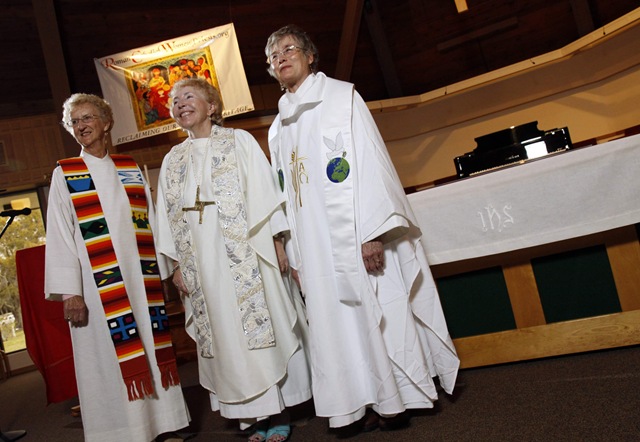
Another group of progressive Catholics has moved beyond advocacy to open defiance of the Vatican by ordaining women despite excommunication.  Called Roman Catholic Womenpriests, the organization now has five female bishops who are actively ordaining women to the priesthood around the US. 

The Sarasota Florida Herald Tribune offered a lengthy article on Bishop Bridget Mary Meehan and her ordination of two women as priests and one as a deacon over the weekend.

A former nun who the Vatican says has been excommunicated will ordain two women priests and one deacon in Sarasota today, part of a growing and controversial movement claiming to be an offshoot of the Catholic church.

The ordinations will be the first in Florida by the group known as Roman Catholic Womenpriests, which preaches equality for women by allowing them into the priesthood and plays down allegiance to the pope.

Bishop Bridget (center) and two new womenpriests The official Catholic church calls the movement and the ordinations illegitimate, and the local diocese sent letters to parishes saying any Catholics who support the ordination of women by attending today’s ceremony will be automatically excommunicated — a banishment from participating in church sacraments such as baptism and communion until forgiveness is given by a priest.

“Good!” said Bridget Mary Meehan, the former nun who is performing today’s ordinations and is one of five bishops in the national movement. “They’re upping the ante. People will have to be courageous to support us and that is what this is about. Like our sister Rosa Parks, we refuse to sit on the back of the bus any longer.”

A similar story comes from the Sacramento Bee newspaper in California.

To parishioners in her small Sacramento congregation, Elizabeth English is their Catholic priest: She presides over their Sunday Mass, leads them during Communion and baptizes their babies.

To the Roman Catholic Church, English symbolizes a topic that church leaders consider closed: the ordination of women priests.

English left the Roman Catholic Church five years ago to pursue her calling to the priesthood. She is now a priest in the Independent Catholic Church, a group not recognized by the Vatican. She is the only female Catholic priest in the Sacramento region.

“I had to leave the church; there was no place for me,” she said. “I wish there was.”

Another of the five Womenpriest bishops, Andrea M. Johnson, will appear tomorrow at the Divinity School of Vanderbilt University.  Bishop Johnson will speak and participate in a blue ribbon panel discussion about female ordination.  This information comes from blogger Wild Hair whose self description is “Roman Catholic Priest, still in reasonably good standing; aka: eminence, the cardinal archbishop of HGN.”

Finally, Bishop Bridget mentioned earlier has her own blog with lots of info and links about the Womenpriest movement.  Check it out.

This article is cross posted at The Open Tabernacle.

Be careful what you tweet

Sometimes it is easy to define ourselves by what we are not.  Thus, as a twenty year old watching the 1968 presidential election, I realized I was not the Republican I thought I was due to Richard Nixon’s southern strategy, which was nothing less than fear-mongering and race-baiting.  From the Wikipedia entry regarding the southern strategy, according to a Nixon strategist:

From now on, the Republicans are never going to get more than 10 to 20 percent of the Negro vote and they don’t need any more than that… but Republicans would be shortsighted if they weakened enforcement of the Voting Rights Act. The more Negroes who register as Democrats in the South, the sooner the Negrophobe whites will quit the Democrats and become Republicans. That’s where the votes are. Without that prodding from the blacks, the whites will backslide into their old comfortable arrangement with the local Democrats.
 
While Phillips sought to polarize ethnic voting in general, and not just to win the white South, the South was by far the biggest prize yielded by his approach. Its success began at the presidential level, gradually trickling down to statewide offices, the Senate and House, as legacy segregationist Democrats retired or switched to the GOP.


The Willie Horton ad of 1988 and the 2008 birther and “Obama is a Muslim” movements continued this grand legacy of playing on fears born of the dark side of human nature.

Similarly, it’s easy to be a feminist when Erick Erickson of Red State blog (one of the most popular Republican blogs in Washington) tweets the following after the Super Bowl Tebow ad:

Erickson tweets

To paraphrase an old adage, best to keep your mouth shut and let people think you’re a fool than to tweet and remove all doubt.  Kudos to Pam Spaulding for this snapshot.

Church of England General Synod 2010 convenes

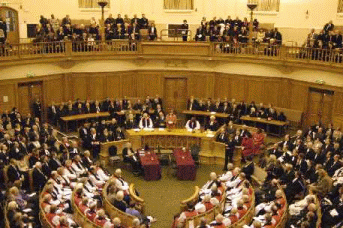
Queen opening the General Synod in 2005 Today marks the start of the 2010 General Synod of the Church of England.  As a non-Anglican, I may misunderstand the polity of the worldwide Anglican Communion; with that disclaimer, this is what I think I know, but I stand open to correction.

The Church of England, headed by the Archbishop of Canterbury, is the mother church for Anglican bodies around the world.  While Archbishop Rowan Williams exercises the authority of persuasion and prestige, those Anglican bodies in communion with the Church of England are essentially self-governing.  Thus, Archbishop Rowan unsuccessfully lobbied the Episcopal Church of America last year to refrain from allowing LGBT persons to be ordained as bishops.

Unrelated to the General Synod, Archbishop Williams hosted ELCA presiding bishop Mark Hanson and an ELCA delegation on Friday last.  Lutherans and Anglicans already have close relationships (in the US, the Episcopal Church and the ELCA have full communion agreements and in Europe, the Anglicans and the Lutherans of the Baltic states have a similar arrangement in the Porvoo Communion), and the meeting stressed strengthening those relationships:
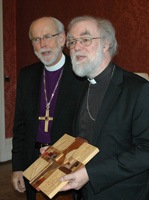
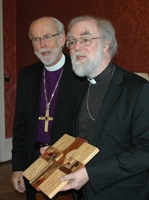
Bishop Hanson with ACB Williams The Rev. Mark S. Hanson met with Dr. Rowan D. Williams, Archbishop of Canterbury, in a private hour-long meeting Feb. 4 at Lambeth Palace here.  After the meeting Hanson said the two discussed strengthening Anglican-Lutheran relationships, challenges each leader faces within his own communions, the proposed “Anglican Covenant” to deepen internal church relationships, global environmental issues, Christian-Muslim relationships, and mutual concern for conflicts in places such as Sudan and the Middle East.

Hanson told the ELCA News Service that the discussion of strengthening Anglican Communion relationships focused on existing full communion agreements — in Canada, Europe and the United States.  “We talked not only about how this time of ‘reception’ can strengthen the ministries and mission we share, but provide new opportunities for us to be engaged in ways we haven’t even imagined,” Hanson said.

The two world church leaders discussed how both communions can focus on “the pressing issues of the world in which God has placed us,” said Hanson.  He said the two agreed there is an urgent need for the United Nations and the U.S. and British governments to find a solution to the conflict in Sudan. The two also discussed commitment and concern for Palestinian Christians, and support for the Council for Religious Institutions in the Holy Land, for Lutheran and Anglican churches in the region and for dialogue with religious leaders in Israel.

In an official written statement to the archbishop, Hanson noted a series of priorities that Lutherans and Anglicans share, including care for the environment, working to end poverty and disease, and seeking peace and justice through greater interfaith understanding.  He also noted that Lutherans and Anglicans have faced their share of “challenges in our communions.”

This latter statement about “challenges in our communions” is a bit of tongue in cheek understatement.  The two clerics share a commonality as leaders of church bodies embroiled in controversy over LGBT issues, especially gay clergy.  Yet, each has taken a different public posture.  Bishop Hanson has attempted to remain neutral although the opponents of the ELCA’s pro-LGBT resolutions last summer would claim otherwise; to Lutheran CORE and the WordAlone Network, Bishop Hanson was a primary culprit and behind the scenes force that manipulated the church wide assembly actions, but this merely reflects a conspiracy theorist mentality, in my view.  Archbishop Williams, on the other hand, has been outspokenly against the Episcopalian’s 2009 pro-LGBT actions.

The 2009 US Episcopal decision to allow gay bishops provides the dramatic undercurrent to the 2010 Church of England General Synod.  The issue arises over the effort by conservatives to recognize the American dissident group of Episcopalians, the Anglican Church in North America (ACNA).  The Telegraph UK reports:

Leading conservative clergy have declared their support for a motion at this week’s General Synod which would ally the Church with the Anglican Church in North America (ACNA).

This was formed in opposition to the consecration of Gene Robinson, the first openly homosexual bishop, and the actions of liberals in the Episcopal Church of the US, which is the official Anglican body.

However, the House of Bishops has tabled an amendment to the Synod motion which would seek to defuse the issue by postponing a decision until next year.

The Rt Rev Nicholas Reade, Bishop of Blackburn, is opposed to the stance taken by his colleagues. He said: “I am hoping for a sign of early support for ACNA, not a report coming back to Synod by the end of 2011.”

The Rt Rev Wallace Benn, Bishop of Lewes, a fundamentalist on the Church’s evangelical wing, said: “It seems to me that the House of Bishops’ motion is just needlessly undermining, delaying and prevaricating.”

The original motion, put down by Lorna Ashworth, an evangelical from the Chichester diocese, comes after the Episcopal Church elected a homosexual priest, Mary Glasspool, to be a suffragan bishop in the Los Angeles diocese.

Christian Today offers more background and insight into the debate over the tabled resolution.

American Episcopal priest and blogger Scott Gunn has several posts about ACNA, and his latest is a warning for the Anglicans of the home country that countenancing the schismatics from America will only invite internal turmoil.

Like dealing with a child who is throwing a tantrum, you cannot reward bad behavior. Recognizing secessionists in America ensures they’ll be in England sooner rather than later. Making it clear that they will not be recognized by the Anglican Communion because they chose to walk apart will at least slow them down.

America Magazine, the Catholic Weekly, discusses a different issue which is of greater concern to Roman Catholics, and that is the recent papal invitation for disaffected Anglican priests to be accepted into Roman Catholicism.

The Church of England’s Parliament, known as the General Synod, meets this week, beginning today with an announcement on women bishops which is certain to have an impact on the numbers of Anglican traditionalists choosing to take up the Pope’s ordinariate offer.

Synod voted two years ago to move towards consecrating women bishops, but is yet to come up with a formula for doing so which doesn’t at the same time alienate traditionalists who oppose the move.

Does this make it more likely that C of E traditionalists will accept the Pope’s ordinariate offer? Yes and no. For those that have already decided, in principle, to accept the offer and are waiting on the details, it will confirm their decision. But the view among most traditionalists I have spoken to is that an early exodus would weaken their attempts to safeguard the ‘Catholic’ place in the Church of England. Supporters of women bishops be able to say, in effect, “they’re going anyway. Why agree to what they want?” As long as traditionalists remain in the C of E, the threat of their departure is likely to make supporters of women bishops more likely to negotiate.

You may follow the General Synod proceedings on the website of the Church of England.
Updated count of ELCA Lutheran congregational departures

Shrimp, a conservative blogger at Shellfish asked the secretary of the ELCA for a current status report on ELCA defections.  Secretary David Swartling responded with the following update:

As of February 3, we have been advised that 220 congregations have taken votes to leave the ELCA. In 156 congregations, the first vote passed; in 64 congregations the first vote failed. 28 congregations have taken a second vote, all of which passed.

Remember, the ELCA consists of over ten thousand congregations spread over sixty five regional synods.  The ELCA secretary noted that sixteen of the synods (1/4th) “have not reported any congregations that have voted to terminate their relationship with the ELCA.”

Shrimp made no comment on these findings, and for good reason.  These numbers don’t fit the Lutheran CORE goal of a “reconfiguration of North American Lutheranism.”  Lutheran pastor  John Petty earlier suggested that a minimum of one thousand congregations would be necessary for a new denomination to be viable, and even then it would be small.  That would be smaller than the Wisconsin Evangelical Lutheran Synod (WELS claims 1,290 churches according to its website), which ranks a weak third in size behind the ELCA and LCMS even in its prime Midwest region.  For comparison, the Association of Free Lutheran Churches (AFLC) claims 270 congregations, and the Lutheran Brethren 123. 

These numbers beg another question: why is there a single large moderate Lutheran denomination and half a dozen, smaller, conservative ones?  Is there something inherent in those who erect boundaries that makes them more exclusive?  Pup tents vs big tent?

We are now approaching half a year since the church wide assembly in Minneapolis.  These first six months have seen the plucking of the “low hanging fruit”, congregations that already had one foot out the door, including mega-churches in Glendale, Arizona and Lakeville, Minnesota.  What will the next six months and beyond bring? 

Without meaning to diminish the deep hurt in departing congregations and in many that remain in conflict within the ELCA, this first half year since CWA09 hardly signals the seismic shift predicted by the Lutheran CORE rabble rousers nor the wrenching schism that the media trumpets every time this congregation or that one votes to depart.  What can the holier-than-thou trinity of Lutheran CORE, WordAlone Network, and Lutheran Congregations in Ministry truly aspire to?  Another Lutheran Brethren?  Another AFLC?  Another WELS?  Another LCMS?  A “reconfiguration of North American Lutheranism”?

Steady as she goes.